

See the recorded position together
Bring relevant asset and debt records into one overview instead of reconstructing the picture from several folders each time.
Explore the financial overviewRetirement records & estate preparedness
Bring decades of superannuation, investments, property records and important paperwork into one clear Australian financial record. Keep the information useful for your own reviews and conversations with people you trust.

Start with your situation
Over years of working, managing super, buying property or investing, financial records can accumulate across different providers and folders. Preparing for or living in retirement is a useful time to bring those details together. An organised record can help you prepare for an adviser meeting and make relevant information easier for your partner or family to find.
Statements, policies and supporting paperwork may be spread across several physical and digital locations.
Super, savings, term deposits and investments may need checking across different providers.
A trusted person may not know where to find account locations, property documents or current policy details.
You need a structure you can maintain at your own pace, without having to organise everything at once.
See the connected record
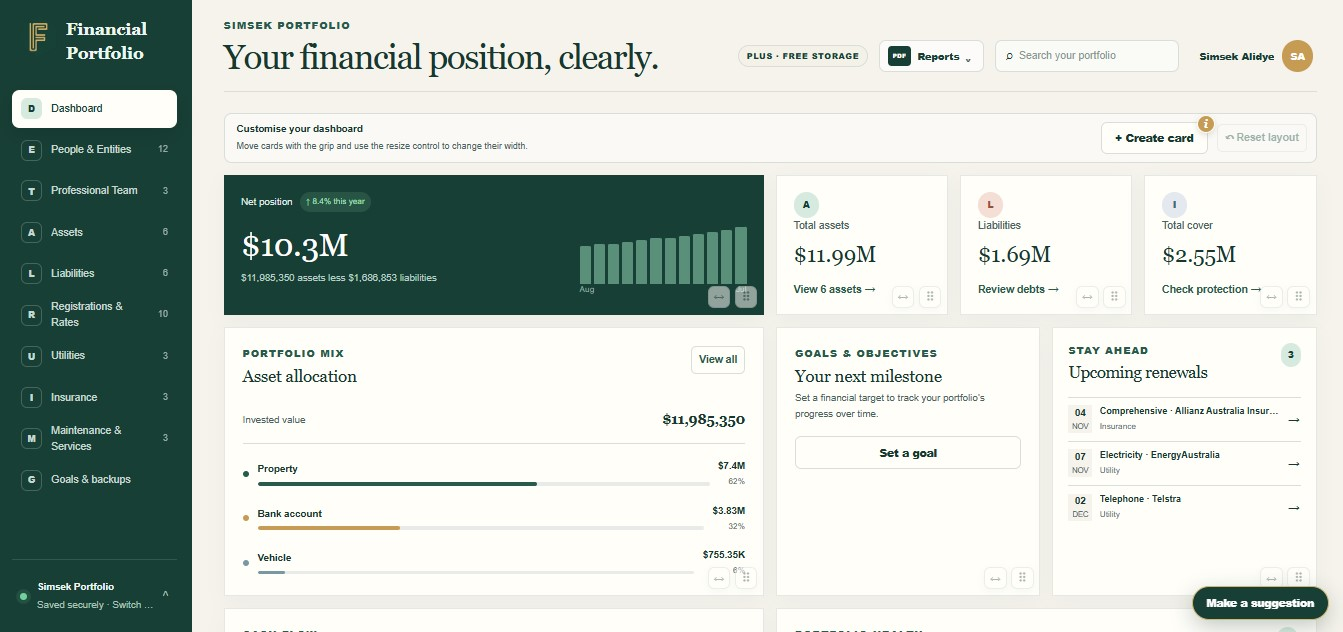
Review your recorded assets and liabilities in one overview, then return to the documents and details behind them. Keep relevant super, savings, property and investment records together. The figures reflect the information you maintain; they are not a retirement-income projection or a verified assessment of your position.
Useful connections
Bring relevant asset and debt records into one overview instead of reconstructing the picture from several folders each time.
Explore the financial overviewOrganise current statements, policy documents and other supporting files beside their records, within your plan’s storage allowance.
See document organisationUse the available reports to summarise recorded information for a review. Check the detail before sharing it with family or a professional.
Explore reportsPortfolio Plus lets you select which sections a trusted viewer can see. Documents need separate sharing choices; access is not automatic.
See how selected sharing worksFeature breakdown
| Feature | What it does | Why the connection matters |
|---|---|---|
| Net worth dashboard | Summarise recorded super, savings, property, investments and liabilities. | Prepare a clearer starting point for a review with an adviser. |
| Document vault | Keep permitted copies of important documents beside relevant records. | Keep references easier to locate while retaining originals where appropriate. |
| Selected viewer access | With Portfolio Plus, invite a trusted viewer to permitted sections and share documents separately. | Choose access deliberately; beneficiary records do not grant it automatically. |
| Reports | Generate available summaries of recorded information. | Support a family or professional conversation without replacing formal legal documents. |
Access and privacy
Start with a few useful records and add detail gradually. You maintain values from your statements without entering bank passwords into Financial Portfolio. Keep control of your sign-in and review the access arrangements you choose. Help articles and tutorials explain the steps when you need them.
Understand access controlsRead the privacy policyTry a free tool
Use the Document and Policy Checklist Builder to select relevant categories and download a checklist you can complete. Note where each document is kept, its version date and a useful contact. It is a records aid, not a complete estate-planning checklist.
Build your free checklist FINANCIAL PORTFOLIO
How to get started
Start with the accounts and records most relevant to you, such as super, savings, investments, property, loans and policies. Check their dates.
Enter the current information you have and connect the relevant people or entities. Keep an estimate distinguishable from a confirmed balance in your supporting notes.
Add the statements or policy documents that explain the entries. Work through a small group of records before moving to the next.
Check for missing or duplicated entries, prepare a report and take your questions to the appropriate adviser. Revisit the records when new information arrives.
Keep the purpose clear
Having an organised record does not mean handing over control. You can maintain your own information and choose what, if anything, to share. When a conversation with family or an adviser is useful, the record can help identify the accounts, documents and outstanding questions that deserve attention.
Financial Portfolio organises recorded information. It does not calculate whether you have enough to retire, determine pension eligibility or recommend investments or drawdown strategies. Ask an appropriately qualified professional for advice suited to your circumstances.
 FINANCIAL PORTFOLIO
Free forever for personal use
One portfolio, 25 MB of document storage, built-in fields, dashboard and reports.
Portfolio Plus adds up to five portfolios, 250 MB of storage, custom fields and viewer access.
Try Plus free for three months, with no credit card required. Then choose A$79 a year or A$7.99 a month if you want to subscribe. We will email you before the trial ends.
Keep the picture connected
Choose the resource that helps you put this into practice.
Yes. The app organises financial records rather than requiring a particular employment status. Choose the assets, liabilities, policies, documents and people relevant to your circumstances.
No. A summary of recorded assets and debts is not a retirement-income projection or personal financial advice. Use the organised information to prepare questions for an appropriately qualified adviser.
No. Your accounts remain with their providers. Financial Portfolio is a separate record you maintain; it does not move money or automatically refresh all your balances.
Yes. Begin with the information you have, check the entries and add more when useful. The first-records tutorial can help you find a starting point.
A viewer you have already invited can see only their permitted sections and explicitly shared documents, subject to the account and plan access arrangements. Naming a beneficiary does not grant app access or automatically release files after a death. Make formal legal and access arrangements separately; contact the team if you need help with an account situation.
Portfolio is free forever for personal use and includes one portfolio, 25 MB of document storage, built-in fields, a dashboard and reports. Portfolio Plus adds more storage, custom fields, viewer access and up to five portfolios. See current pricing.
Start with what you have
Bring the information together for yourself, then choose how to prepare for conversations with family and professionals.