

Find each property’s records
Keep the property details, supporting documents and related people in context, rather than relying on a folder name to explain everything.
Explore asset recordsProperty portfolio & wealth consolidation
Move beyond scattered mortgage statements, super portals and property files. Connect your homes, loans, recorded equity and investments into one Australian wealth overview.

Start with your situation
As your financial life grows, keeping track of the whole picture becomes more complex. Your home and loan, investment properties, super, shares and insurance may sit with different providers. Each statement tells part of the story. Bringing them together can mean searching through portals, emails and spreadsheets before you can review what you own and owe.
Property values, loan balances, super and investment records sit in different places.
Loan balances, offset accounts and ownership shares need to be understood together without counting the same value twice.
A bank balance alone does not show your recorded assets and liabilities.
The same paperwork may need gathering again for a refinancing enquiry, accountant meeting or financial review.
See the connected record
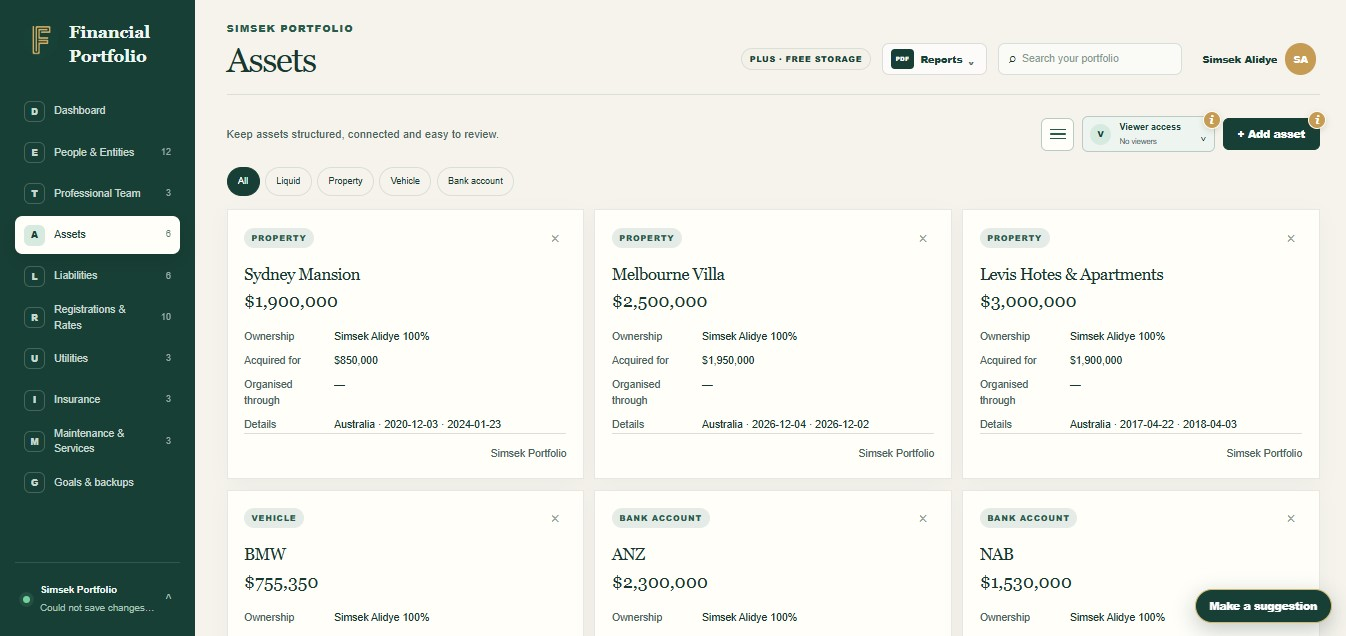
Financial Portfolio brings your recorded financial information into one structure. Connect a property with its relevant mortgage, people or entities, documents and policy details. Maintain the values from your own sources, then review the overall position without losing the context behind each entry.
Useful connections
Keep the property details, supporting documents and related people in context, rather than relying on a folder name to explain everything.
Explore asset recordsRecord the loan balance and link it to the relevant property. Keep the borrower and owner clear when they are different people or entities.
Explore liability recordsBring policy documents, statements and other supporting paperwork beside the records they explain. Check storage allowances before uploading.
See document organisationLook beyond property alone. Include other recorded assets and debts so the summary reflects the financial information you have entered.
See the dashboardFeature breakdown
| Feature | What it does | Why the connection matters |
|---|---|---|
| Net worth dashboard | Summarise recorded assets less liabilities. | Return to the records behind the overall figure. |
| Assets and liabilities | Record property, super, shares, vehicles, cash accounts and debts. | Keep property alongside the rest of your financial picture. |
| People and ownership | Record owners, shares and entity relationships. | Keep personal, joint and entity-held records distinguishable. |
| Document vault | Keep selected titles, loan contracts and policies beside their records. | Find the supporting document in its financial context. |
Access and privacy
You enter and update figures from your own statements or provider information. You do not need to enter your bank passwords into Financial Portfolio. Keep sign-in details out of your records and review the app’s access and privacy information before sharing anything.
Understand access controlsRead the privacy policyTry a free tool
Use the free Property Portfolio Equity Calculator to work out combined recorded equity and loan-to-value ratios from the figures you enter. No account or login is required. It is a calculation, not a property valuation or lending assessment.
Calculate your property equity FINANCIAL PORTFOLIO
How to get started
Find the address, ownership information, latest loan statement and relevant policy. Note the date and source of any estimated value.
Add the relevant people or entities, then the property and associated liability. Link them without treating an owner and borrower as interchangeable.
Attach useful documents to the appropriate records. Keep professional advice and legal documents as references, not assumptions inferred from a chart.
Update a balance, replace an expired policy or revise a recorded value when you have new information. Check the summary for missing or repeated entries.
Keep the purpose clear
For a household with a home and an investment property, the useful question is not just what each property is worth. It is which loan belongs with it, who is connected to it and where the current paperwork lives. Financial Portfolio gives those records a structure you can maintain and explain to a trusted person or professional.
This is a property record organiser within a wealth tracker, not a property valuation service, rental-management system or investment-return forecast. You maintain the figures and should check the source before relying on them.
Free forever for personal use
One portfolio, 25 MB of document storage, built-in fields, dashboard and reports.
Portfolio Plus adds up to five portfolios, 250 MB of storage, custom fields and viewer access.
Try Plus free for three months, with no credit card required. Then choose A$79 a year or A$7.99 a month if you want to subscribe. We will email you before the trial ends.
Keep the picture connected
Choose the resource that helps you put this into practice.
You enter and update property values and loan figures from your own sources. Keep the date and supporting document with the record where useful. Financial Portfolio does not automatically obtain valuations or refresh all balances.
Yes. A portfolio is a collection of financial records, not a single property. Keep related properties together when that suits your situation. The free Portfolio plan includes one portfolio; Portfolio Plus supports up to five separate portfolios.
No. You primarily maintain the recorded values yourself. Use a dated source for estimates and check the current balance with your lender. Financial Portfolio does not verify a property valuation or legal ownership.
You can create relevant entity records and link them to assets and ownership details. Keep the entries consistent with the documents you hold. These records do not verify legal title or determine tax treatment. See trust and company records.
Viewer access is a Portfolio Plus feature. You select the sections a viewer may see, and share individual documents separately. Recording someone as an owner, borrower or beneficiary does not automatically give them app access.
Portfolio is free forever for personal use, with one portfolio, 25 MB of document storage, built-in record fields, a dashboard and reports. It does not include viewer access or custom fields. Compare the plans before choosing.
Start with what you have
Start with the assets and debts you know, then connect the details that explain them.